

Caca, cascada e cataro xe la morte dei veci
(Diarrea, fratture e tosse portano i vecchi alla tomba)
Diarrhea, fractures and cough bring the old to the grave

Can no magna can
(Tra simili non ci si sbrana)
Dog does not eat dog

Can scotΰ de l'aqua calda ga paura de la freda
(Chi subisce i danni dal suo errore, poi diventa fin troppo prudente)
Dog scalded by hot water is also afraid of cold
(Who suffers damage, then he becomes until too prudent)

Caval bianco e bela mujer dΰ sempre pensier
(Ricchezze e bella moglie danno sempre preoccupazioni)
White horse and lovely wife will always give concern
(Richness and beautiful wife are concerns always)

Caval che varda indrio el g'ha poca vogia d'andar avanti
(Chi si guarda indietro ha poca voglia di proseguire)
A horse that looks back has little desire to go forward

Caval vecio e servitor cojon no ingana el paron
(Un ronzino e un servo sciocco non ingannano il padrone)
A nag and a foolish servant do not deceive the boss

Caval, putana e persegar [frutteto] trent'ani no i pol durar
(Cavallo, prostituta e frutteto non possono durere trent’anni)
A horse, a prostitute or an orchard can not last thirty years

Cavalo in prestio no xe mai straco e no ga mai fame
(Delle cose degli altri non si ha la stessa cura delle proprie)
Horse on loan is never tired and never hungry
(Things of others don't care us as our own)

Cavel canω [capello bianco] no xe credω
(L’anziano che parla non viene preso in considerazione)
Elder will not be taken into account

Che la piasa, che la tasa e che la staga a casa
(Le qualitΰ della moglie perfetta: piacere, tacere, restare a casa)
The qualities of the perfect wife: be nice, be quiet, and stay at home

Chi ama, brama
(Chi ama, desidera ardentemente)
Who loves, he longs
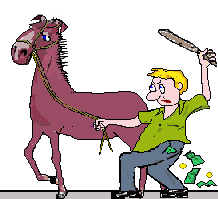
Chi bastona el so cavalo, bastona la so scarsela [tasca]
(Chi maltratta le proprie cose va contro ai suoi interessi)
Who beats his horse beats up his pocket

Chi che ga na bea mojθre [moglie], no eΰ xe tuta sua
(Chi ha una bella moglie dovrΰ dividerla)
oppure
Chi ga bela muger no la xe tuta soa
(Chi ha una bella moglie non θ tutta sua)
Who has a beautiful wife will share her likely

Chi che se marida vecio sona de corno
(Chi si sposa da anziano rischia i tradimenti)
Who gets married when elderly, will play the horn
(Who gets married when elderly risks betrayals)

Chi ciama Dio no xe contenti; chi ciama el diavolo xe disperai; chi dise ohimθ xe inamorai
(Chi soffre invoca Dio, chi si dispera chiama il diavolo, chi si batte il cuore θ innamorato)
Those who suffer invoke God; anyone who despairs calls the devil; who beats the heart is in love

Chi copa [ammazza] gati, non fa pμ ben i so fati
(Chi ammazza i gatti non ha fatto i conti coi topi)
Who kills cats makes mistakes

Chi dΰ e po tol [riprende]: ghe vegna la bissa [una serpe] al cuor
(A chi concede e poi richiede indietro venga una maledizione)
A curse to those giving and then wanting back!

Chi da galina nasse da galina ruspa
(Ognuno si comporta secondo le proprie origini)
Who was born chicken acts as a chicken
(Everyone behaves according to their origins)

Chi dal loto [gioco del lotto] speta socorso, fa'l pelo longo come un orso
(Chi spera di rimettersi in sesto giocando al lotto ha da aspettare e aspettare…)
Hair will become long as the bear to those who expect help from the lottery
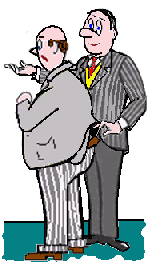
Chi davanti te leca de drio te sgrafa [graffia]
(Chi ti loda di fronte, da dietro ti danneggia)
Who visibly praises you, he furtively damages you

Chi desfa bosco e desfa prΰ [prato] se fa dano e no lo sa
(Chi distrugge il bosco o il prato danneggia se stesso senza saperlo)
Who destroys the wood or grasslands, injures himself unknowingly

Chi dise sposa dise spesa
(Chi dice moglie dice spesa)
oppure
Chi dise dona dise dano
(Chi dice donna dice danno)
Who says woman says spending [or damage]

Chi fa a so modo no ghe diol [non gli duole] la testa
(Chi θ libero di agire non ha grattacapi)
No headaches, when you do what you want

Chi fa la festa no la gode
(Chi fa la festa non la gode)
Who does the party does not enjoy it

Chi furbo se ciama [si ritiene] l'θ un gran minchion
Chi dice furbo a se stesso, θ uno sciocco)
Who says smart to himself, is a fool
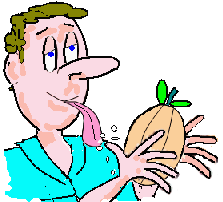
Chi ga bon naso conosse i meloni
(Chi ha fiuto sa cosa fare)
Who has a nose for sniffing knows melons
(Who has a good instinct knows what to do)
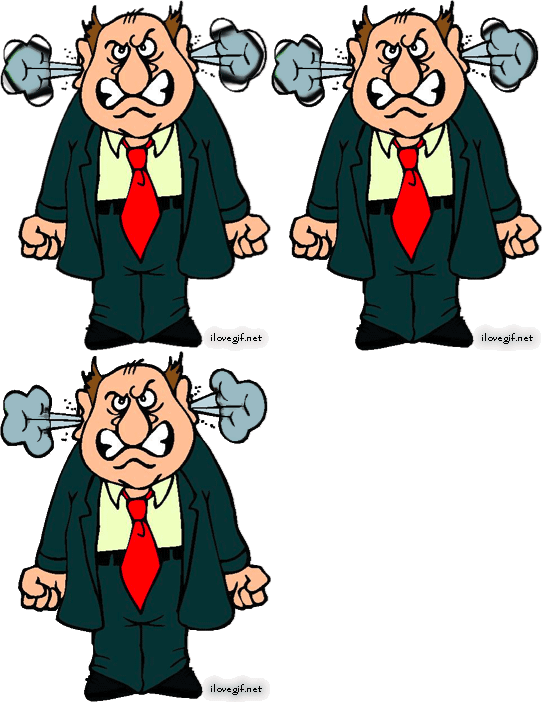
Chi ga dentro 'l fogo [fuoco] manda fora el fumo
(Chi θ furioso manda fuori la rabbia)
Ripreso da www.partecipiamo.it
Who is furious sends smoke out [his rage]

Chi ga el can per la coa [coda] la strassina
(Chi ha capito il problema lo gestisce)
Who takes the dog by the tail should drag it
(Who has understood the problem can manage it)

Chi ga el cao da la soa [suole consumate] ga in culo [dietro] i sbiri [poliziotti]
(Chi ha le suole consumate, sta scappando da qualcosa)
Who has consumed soles has the guards behind

Chi ga el manego [manico] in man lo dopara
(Chi θ incaricato di un compito lo esegua
oppure
Chi ha il comando lo eserciti)
Ripreso da www.partecipiamo.it
Who has the handle in his hand must use it
(Who is at the control should command)
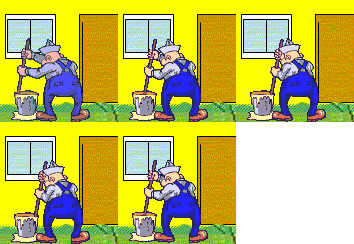
Chi ga i bezzi [soldi] da buttar via bianchisse le case deforavia [dal di fuori]
Ripreso da www.partecipiamo.it (modificato)
(Chi ha soldi da sperperare pittura anche i muri esterni)
Who has money to waste, even paints the exterior walls
(Those who have money to squander, do weird things)

Chi ga paura del diavolo no fa bezzi [soldi]
(Chi teme il diavolo non si arricchisce)
Who fears the devil does not enrich

Chi ga santoli [padrini] gΰ buzzolai [ciambelle]
(Chi ha protettori ha vantaggi)
Who has godfathers has doughnuts
(Who has sponsors has benefits)

Chi ga un porzθl solo lo ga bel; chi ga un tosato lo ga mato
(La cosa piω difficile θ tirar su i figli)
Who has just one pig has a beautiful one, who has an only child has a crazy son

Chi ghe fa la barba al musso [asino] perde l'aqua e anca el saon
(E’ tutto sprecato se ti dai da fare con chi θ testardo)
Who shaves the mule, loses water and soap too
(With stubborn is a wasted effort)

Chi ghe n'ha ghe ne spande
(Chi ha ricchezze le mostra in giro)
Those who have wealth, show them around

Chi guerna [tiene a cura] la so pel, guerna un bel castel
(Chi gestisce da sι la sua salute, oppure i suoi averi, gestisce qualcosa che sta andando bene)
Who takes care of himself, will stay in a beautiful castle
(Who takes care of himself goes alright)

Chi la ga d'oro [chi l’ha d’oro], chi la ga d'arzento, chi la ga co le scarpe dentro
(C’θ chi sta benissimo, chi sta bene e chi θ dentro nella cacca)
Someone has a golden fortune, another has a silvered one, and a third one is with his shoes inside

Chi li fa tribola [sgobba], chi li trova giubila
(Chi li guadagna fa fatica, chi li eredita se li gode)
Who earns struggles, who finds [inherits] enjoys

Chi nasse mato no guarisse mai
(Chi nasce matto non puς guarire)
Ripreso da www.partecipiamo.it
Who was born crazy never heals

Chi no ama le bestie, no ama gnanca i cristiani
(Chi maltratta gli animali maltratta anche gli uomini)
Ripreso da www.ilgrottino.net
Who doesn't love the beasts doesn't love even men

Chi no ga fame o l'θ malΰ o l'ha magnΰ
(Chi non ha fame o θ ammalato o ha giΰ mangiato)
Who is not hungry, is sick or has already eaten

Chi no ha bo soi [buoi suoi] no ara de lune [lunedμ]
(Chi non posiede buoi lavora solo nei giorni festivi)
Who does not own oxen cannot work on Monday [works only on holidays]

Chi no me vol no me merita
(Chi non mi desidera non mi merita)
Ripreso da www.partecipiamo.it
Who doesn't want me doesn't deserve me

Chi no more in cuna [culla] ghe ne impara sempre qualcuna
(Chi non muore da bimbo, crescendo ne impara sempre di nuove)
Ripreso da www.partecipiamo.it
Who does not die in his cradle, learns more and new growing

Chi no xe bon de romparse [spezzare] el pan no xe bon de guadagnarsene
(Chi non sa spezzare il pane non θ neanche capace di guadagnarselo)
Ripreso da www.ilgrottino.net (modificato)
Those who are not able to break the bread are not even able to earn for it
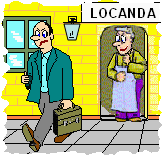
Chi paga avanti [in anticipo] el trato [oste]: servisio mal fato [sarΰ trattato male]
(Chi paga l’oste in anticipo non avrΰ un buon servizio)
Who pays the innkeeper in advance will have a bad service

Chi pissa contro'l vento se bagna la camisa
(Chi piscia contro vento si bagna la camicia)
Who pisses against the wind gets wet shirt

Chi piω sa manco [meno] sa
(Chi crede di sapere piω degli altri sa di meno)
Ripreso da www.claufont.net
The more you know, less you know

Chi porta la roba da festa ogni dμ o che xe novisi o che no' ghe n'a pμ
(Chi si veste da festa ogni giorno o θ sprovveduto o non ha piω soldi)
Ripreso da www.gifmania.it
Who dresses as holiday every day, is naive or has no more money

Chi prima no pensa dopo sospira
(Chi prima non riflette, dopo si pente)
Ripreso da www.partecipiamo.it
Who first has not reflected, then repents of that

Chi roba [ruba] si fa siori [signore]
(Chi ruba si arricchisce)
Ripreso da www.claufont.net
Who steals gets enriched
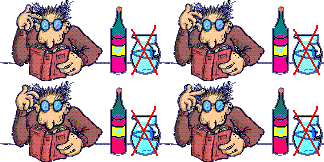
Chi sa el latin loda l'acqua e bev el vin
(Chi θ colto si fa bello a parole ma poi θ come gli altri)
Ripreso da www.partecipiamo.it (modificato)
Who knows the Latin praises water and drinks wine
(Who is educated says fine words but acts like the others)

Chi se vanta d'esser bravo in mare xe mato da ligare
(Chi si vanta di saper navigare, dice sciocchezze)
Ripreso da www.claufont.net
Who boasts to be a good sailor, says nonsense

Chi se vol ben poco posto tien
(Chi tiene a se stesso non invade lo spazio altrui)
Who is educated takes little space

Chi serca cavao e fιmena senza difeto no el gavarΰ mai cavao in stala e fιmena in leto
(Chi cerca cose senza difetti, non le avrΰ mai)
Anyone looking for a horse or a woman without faults, will never have a horse in the barn, nor a girl in bed

Chi subia [sospira] ga pensieri
(Se uno sospira, θ preoccupato)
Ripreso da www.partecipiamo.it (modificato)
Who is worried, sighs

Chi troppo se inchina mostra'l culo
(Chi θ troppo riverente va a rischio di prenderlo in quel posto)
Who bows too much, shows his ass

Chi va a leto senza cena tuta la note se ramena [rigira]
(Chi va a letto senza mangiare farΰ fatica a riposare)
Who goes to bed without dinner, struggles to rest

Chi va al marcΰ cς pochi schei [soldi] li spende mal
(Chi va al mercato con pochi soldi li spende male)
Ripreso da www.claufont.net
Who goes to market with little money, spends it badly

Chi va per i spini [rovi] i θ quei descalzi [scalzi, poveri]
(Chi va tra i rovi capita che sia il povero)
The barefoot is just who often goes through the brambles

Chi va: sa qualcosa; chi manda: speta risposta
(Chi va di persona sa qualcosa, chi manda altri aspetta risposta
Who goes in person knows something, who sends other aspects reply

Chi varda el carteo no magna vedeo [vitello]
(Se guardi il prezzo non mangi carne di vitello)
Who looks at the price does not eat veal

Chi varda i fati dei altri i soi va de mal
(Chi segue i fatti altrui, trascura i propri)
Those who watch other people's facts, neglect of theirs

Chi varda in alto se intopa [inciampa]
(Chi guarda in alto inciampa)
Who looks up, stumbles

Chi varda la luna niente suna [semina]
(Chi guarda la luna non semina)
Those who watch the moon, shall not sow

Chi vol magnar tanto staga in piθ o caminando
(Chi vuole mangiare molto non si sieda o cammini)
Ripreso da www.gifmania.it e modificato
Who wants to eat a lot must stand or walk

Chi vol provar tropo no prova niente
(Chi vuole provare troppe cose finisce col non provare niente)
Who wants to try too many things, ultimately doesn't try anything

Chi vol star ben toga le cose come che le vien
(Chi vuole stare in salute prenda le cose come capitano)
Ripreso da www.partecipiamo.it
Who wants to enjoy good health, should take things as they occur

Chi vol vendare mete in mostra
(Chi vuole vendere qualcosa lo metta in vetrina)
Ripreso da www.webgif.org
Who wants to sell something, puts it on display

Chi vole el pomo [la mela] sbasa la rama [il ramo], chi vol la tosa careza la mama
(Chi vuole la mela accarezza il suo ramo, chi vuole la ragazza si ingrazia la madre)
Who wants an apple caresses the branch, who wishes a girl strokes her mother

Chi xe al coverto quando piove l'θ ben mato se el se move!
(Chi θ al riparo quando piove θ sciocco se si muove)
Ripreso da www.claufont.it
Who is safe when it rains, is silly if moves

Chi xe passω [grasso] no crede a la fame
(Chi θ be nutrito non crede alla fame)
Ripreso da www.claufont.it
Who is fat does not believe the hunger

Chi zerca de far la busa [far del male] ai altri, la fa a se stessi
(Chi cerca di fare un trabocchetto agli altri lo fa a se stesso)
Ripreso da www.claufont.it
Who tries to do a trick to others, he does it to himself

Ciaro [chiaro] te vedo e presto me ricordo; el moroso [l’innamorato] da lontan vale un corno
(Se ti vedo da vicino ti ricordo; se il fidanzato θ lontano non vale nulla)
If I see you from near I remember you; if my boyfriend is far he is worthless


 NOTA D’USO
 USAGE CONDITIONS